Business License
Stainless Steel Chain Conveyors for Food Industry A Complete Guide to Material, Specification, Appl
Stainless Steel Chain Conveyors for Food Industry
A Complete Guide to Material, Specification, Application and Maintenance
1. Material Selection: 304 vs 316L (Required for Food Grade)
1.1 Material Comparison for Food Applications
| Material | Application | Temperature Range | Corrosion Resistance | Surface Finish | Compliance |
|---|---|---|---|---|---|
| 304 Stainless Steel | Beverages, baking, canning, dairy, snacks (normal temperature, neutral food) | -20℃ ~ +120℃ | Good salt spray resistance | Ra ≤ 0.8μm (electropolished / mirror polished) | GB 4806.9, FDA |
| 316L Stainless Steel | Seafood, pickles, frozen food, sauces, CIP cleaning | -30℃ ~ +200℃ | Excellent chloride & salt resistance | Ra ≤ 0.8μm | GB 4806.9, FDA, GMP |
1.2 Selection Principles
General food (pH 4–8, no salt or chlorine): 304 is sufficient with the best cost performance.
High-salt / acidic / low-temperature / CIP environment: 316L is mandatory, with 2x longer service life than 304.
Carbon steel or 201 stainless steel is strictly prohibited due to rust risk and heavy metal migration.
2. Structure and Specifications: Hygienic Design
2.1 Hygienic Structure Requirements
Seamless & crevice-free: Laser welding, lap joint structure, no dead corners.
Easy to clean: Supports high-pressure washing and CIP online cleaning.
Anti-pollution: External drive and lubrication, food‑grade grease only.
Surface treatment: Electropolished or mirror polished, Ra ≤ 0.8μm, no material adhesion.
2.2 Common Specifications
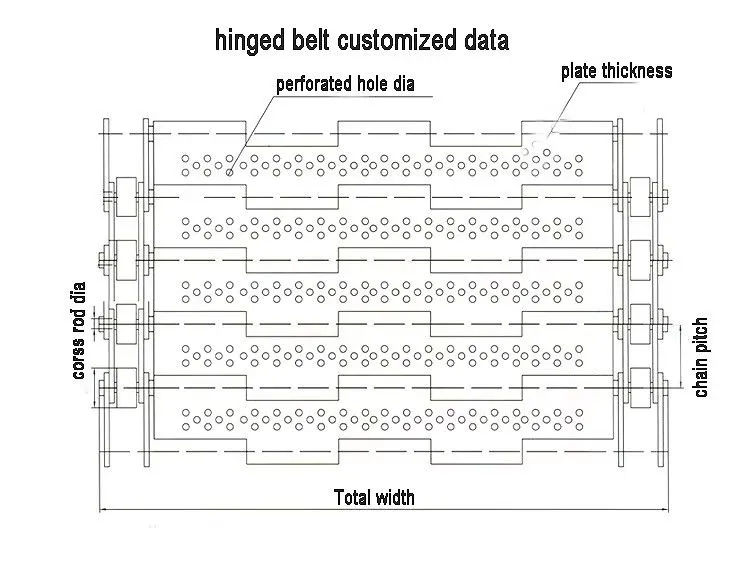
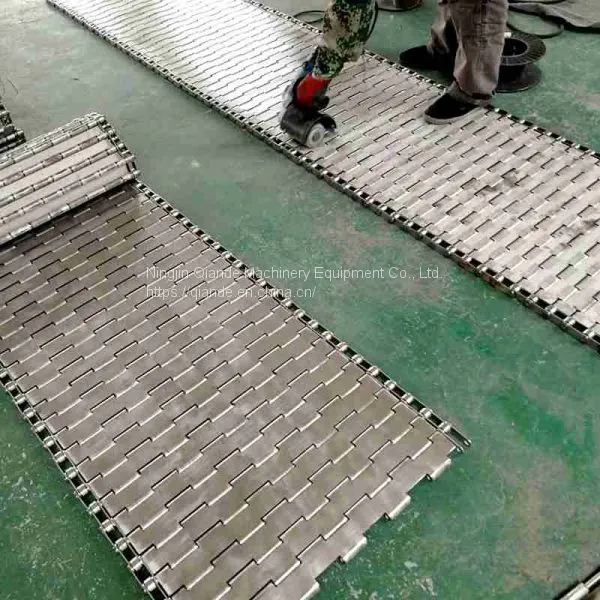
Pitch: 19.05, 25.4, 38.1, 50.8 mm
Thickness: 1.5–2 mm (light), 2–3 mm (medium), 3–5 mm (heavy)
Width: 200–1200 mm
Speed: 0.1–1.5 m/s (variable frequency adjustable)
Load capacity: ≤ 500 kg/point (standard), ≥ 1000 kg/point (heavy-duty)
2.3 Customized Types
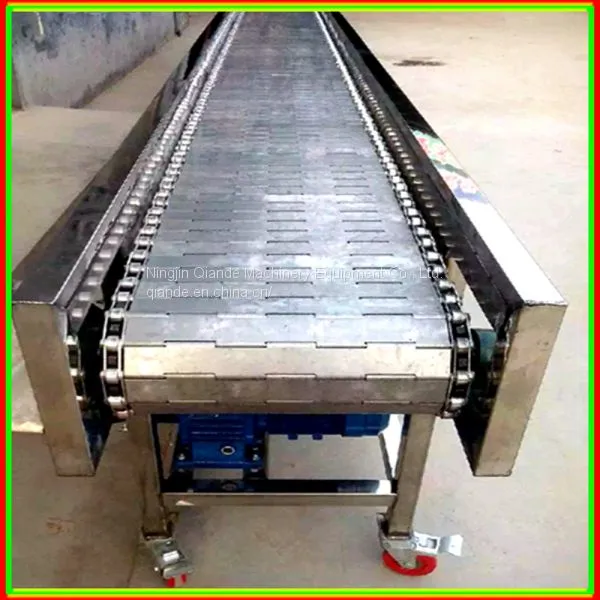
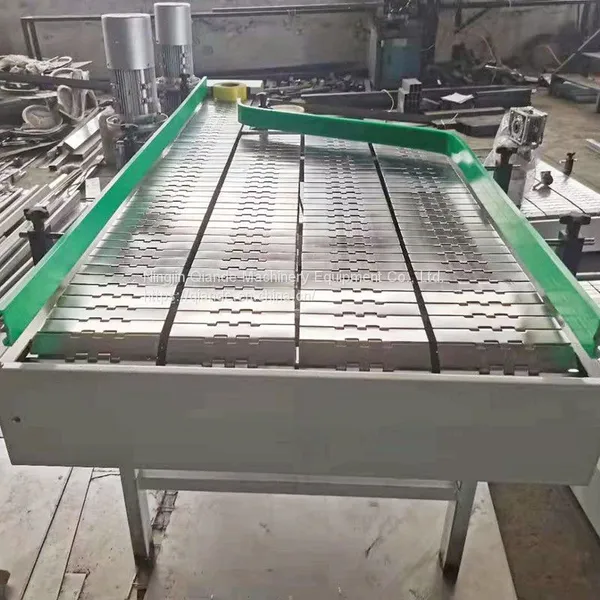
Flat top chain: for bottles, cans, baking, packaging.
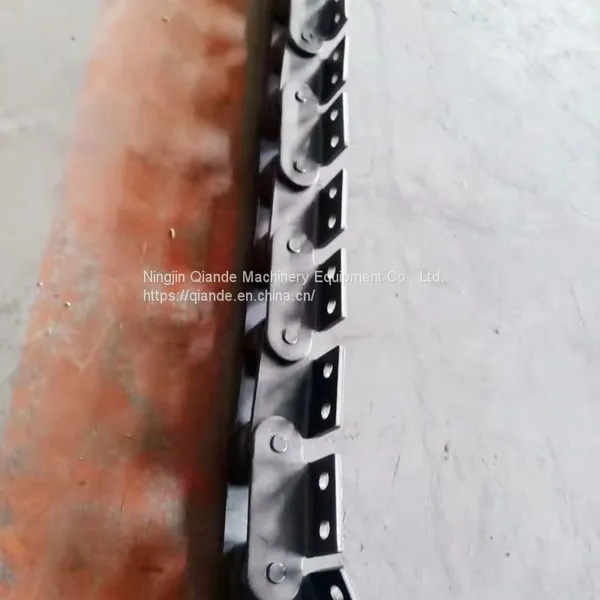
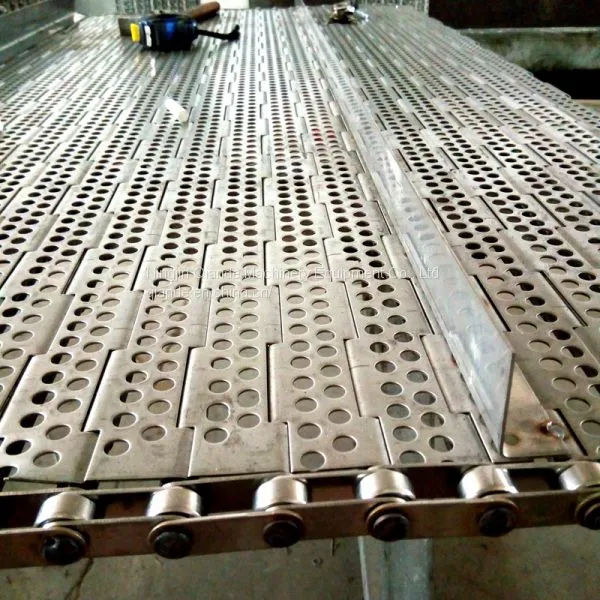
Side wall / baffle type: for bulk materials, sauces, granules.
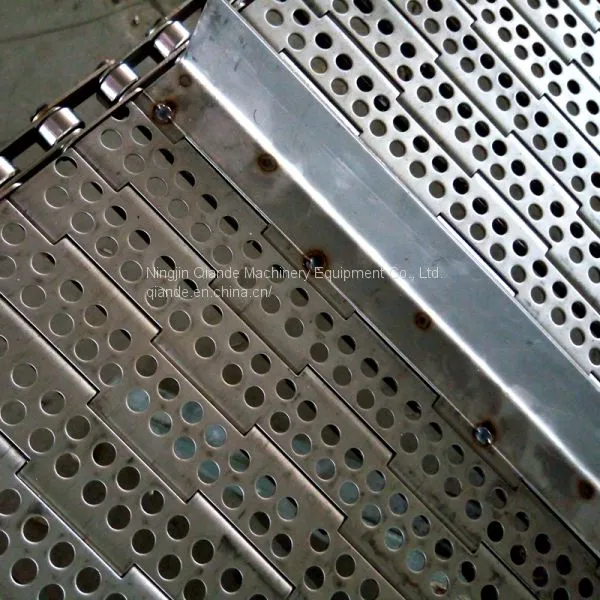
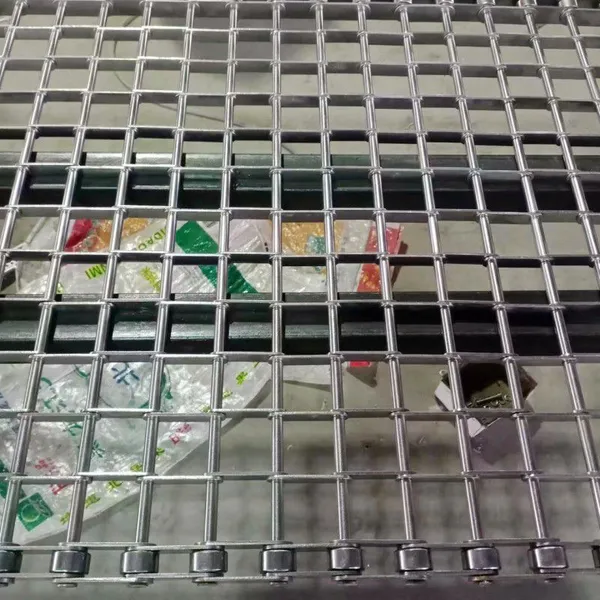
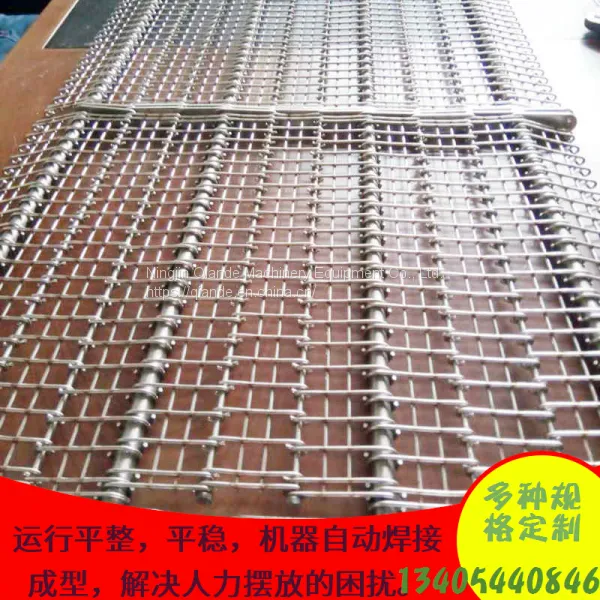
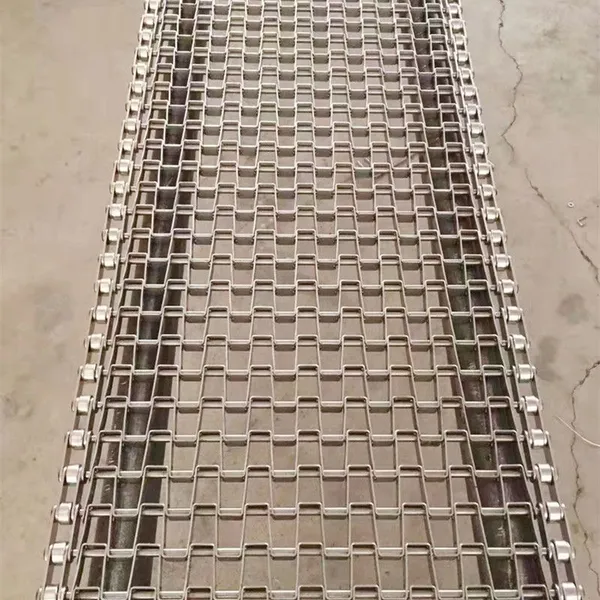
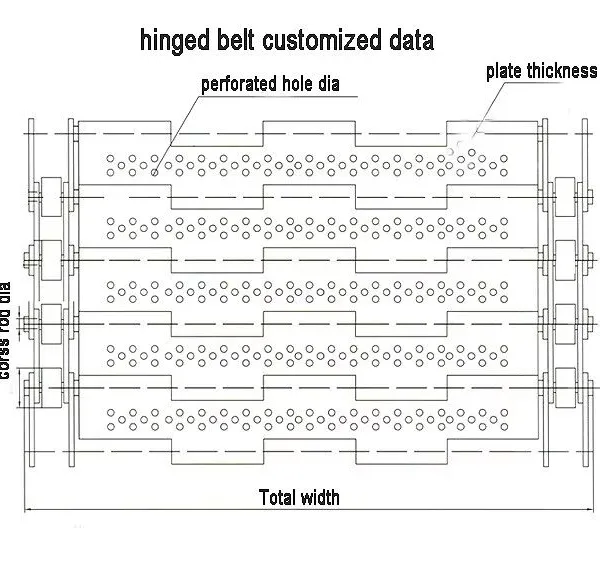
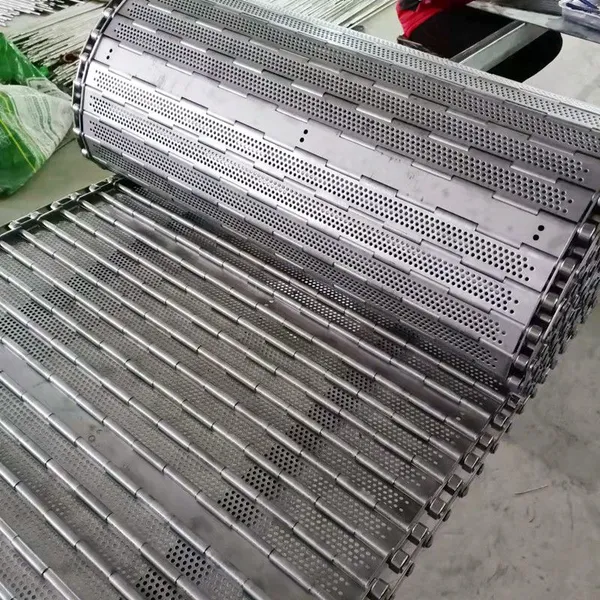
Perforated / mesh type: for cleaning, draining, drying, sterilization.
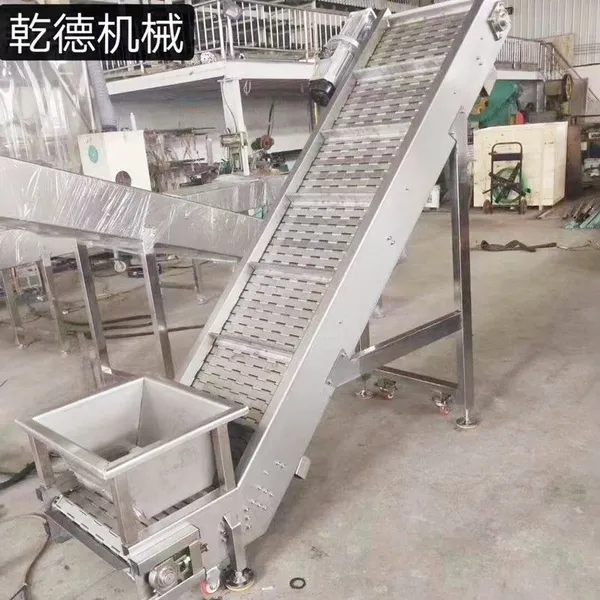
Curved / inclined type: for turning, lifting, inclined conveying.
Low / high temperature type: -40℃ (freezing) to 150℃ (sterilization).
3. Typical Applications in Food Industry
Raw material processing: fruit & vegetable washing, meat cutting, flour conveying.
Processing & forming: baking cooling, chocolate coating, canning, pasteurization.
Packaging & sorting: bottle conveying, labeling, boxing, frozen food lines.
Logistics: finished product handling, cold chain conveying.
4. Daily Maintenance (Food Grade Standard)
4.1 Cleaning
Daily: High-pressure water or air cleaning after each shift.
Weekly deep cleaning: Food-grade neutral detergent → rinse → dry.
CIP system: alkaline wash → acid wash → rinse (fully automatic).
4.2 Lubrication
Use only NSF H1 food-grade lubricant.
Interval: every 3–6 months for normal use; monthly for high-speed or heavy-duty.
4.3 Inspection and Adjustment
Tension: sagging 2–3% of center distance.
Wear: replace if wear > 0.5 mm or pins are loose.
Deviation: adjust sprockets, add guide rails or dual drive.
5. Purchasing Guidelines
Prioritize certificates: material reports, GB 4806.9, FDA, GMP.
Surface finish: Ra ≤ 0.8μm, no burrs or dead corners.
Structure: easy disassembly, crevice-free design.
Customize according to product, temperature, speed and load.
Summary
For the food industry, 304/316L is the basic requirement, hygiene is the core, and easy cleaning + compliance are the keys. Proper material selection, specification customization and standardized maintenance ensure safety, efficiency and long service life.
Recently Posted
-
High-Performance Ton Bag Buckle Conveyor: Your Ideal Heavy-Duty Conveying Solution
January 6, 2026High-Performance Ton Bag Buckle Conveyor: Your Ideal Heavy-Duty Conveying SolutionIn the fields of chemical, construction material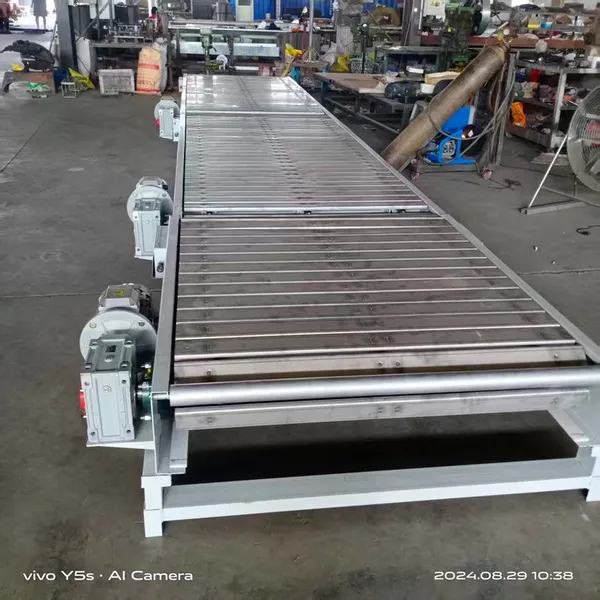 Read More
 -
The cross-border application of conveyor chains under cultural differences
January 4, 2026In global trade, as the core component of industry, the application logic of the conveyor chain is deeply imprinted with the cultu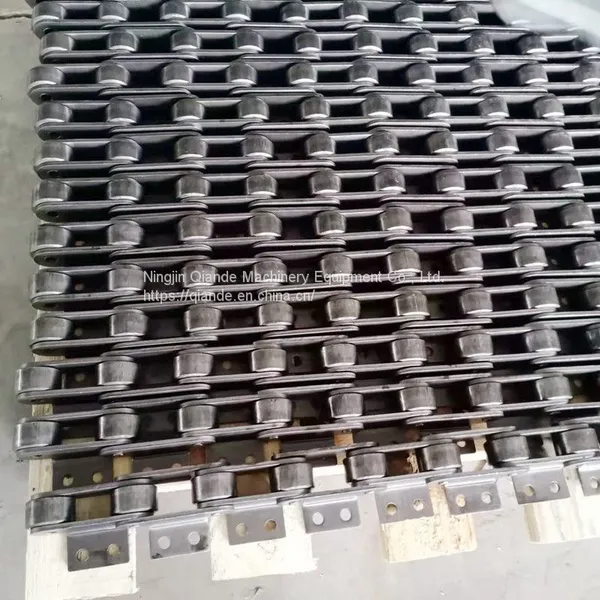 Read More
 -
Key Points of Daily Maintenance of Conveyor Belt
January 4, 2026Key Points of Daily Maintenance of Conveyor BeltI. Daily Inspection Items1. Inspect the chain plate surface for material residues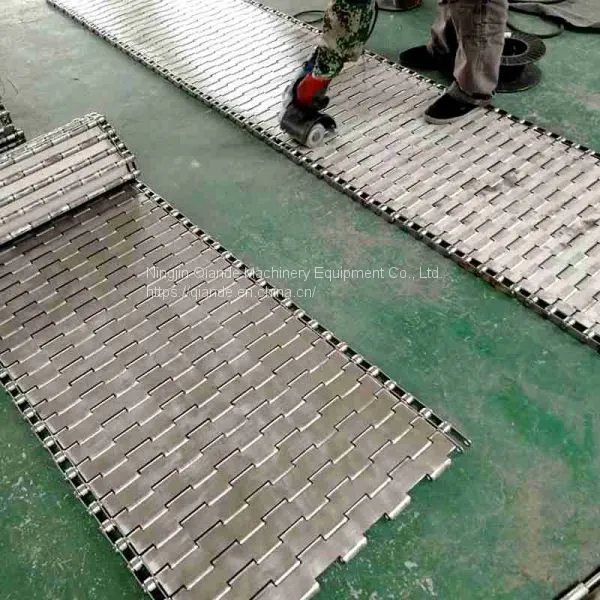 Read More

Contact Us
Recommended Products
-
 Industrial Chain Conveyor Equipment ManufacturersUS$ 20 - 300MOQ: 5 Meters
 -
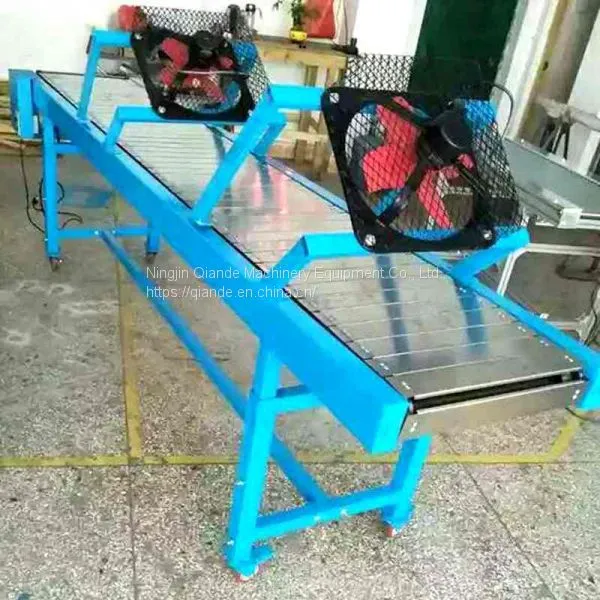
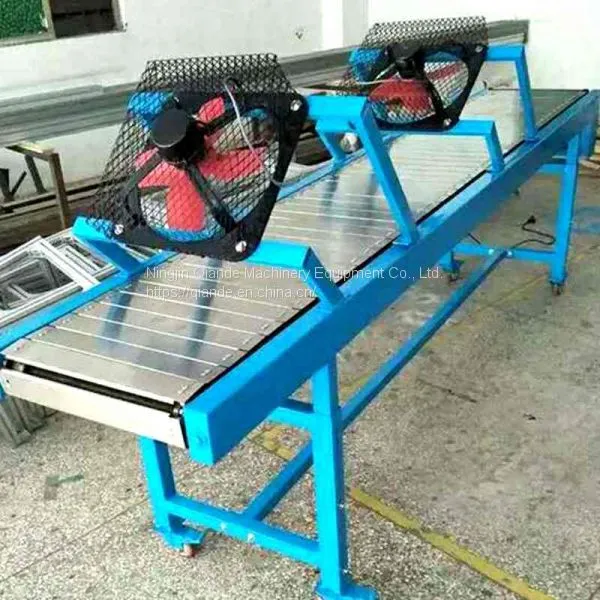
Fan Cooling Chain Plate Conveyor BeltUS$ 20 - 300MOQ: 5 Meters
-
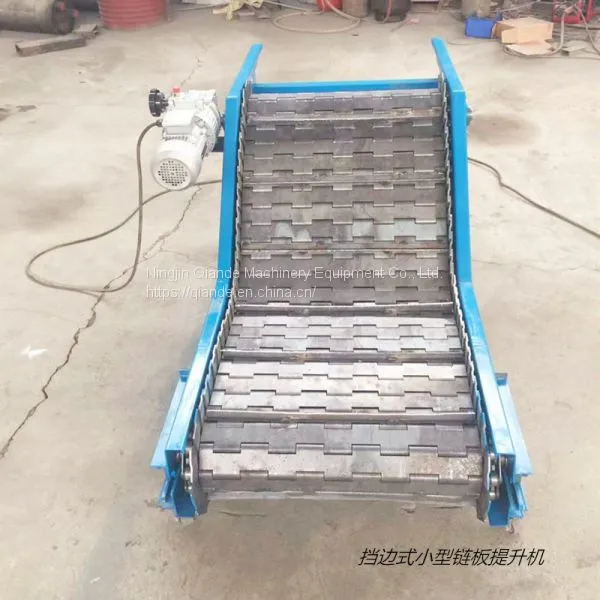
Chain Conveyor Manufacturer, Small Chain Conveyor PriceUS$ 20 - 300MOQ: 1 Meter
-
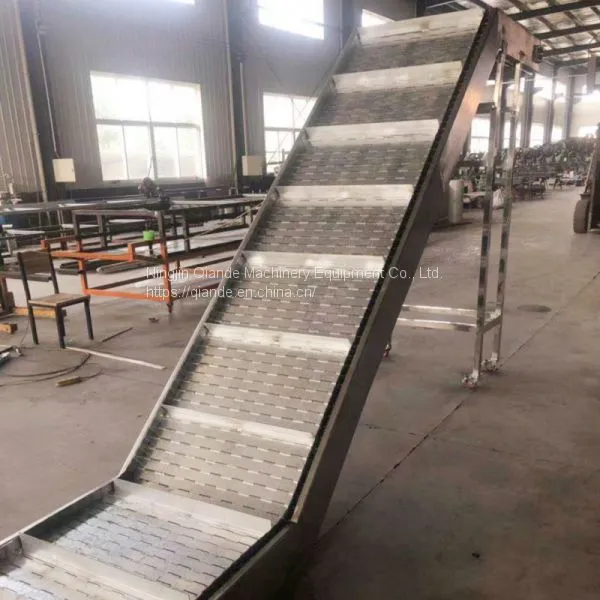
Climbing Chain Conveyor is Widely Used in IndustryUS$ 20 - 300MOQ: 1 Meter
-
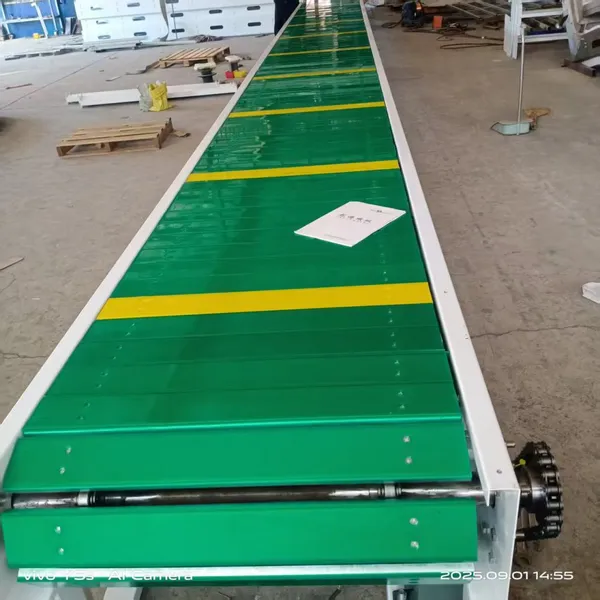
Polyurethane Coated Chain Plate Conveyor Belt, Household Appliance Assembly Line Conveyor BeltUS$ 20 - 300MOQ: 5 Meters
-
Food Stainless Steel Mesh Belt Conveyor VarietiesUS$ 20 - 300MOQ: 5 Meters
-
Food Climbing Conveyor Manufacturer, Multi-specification SelectionUS$ 20 - 300MOQ: 1 Meter
-
10B, 12b, 16b Industrial Conveyor Roller Chain Manufacturer, Complete ModelsUS$ 10 - 50MOQ: 5 Meters
-
Quick-freezer Conveyor Stainless Steel Mesh Belt Manufacturer Direct SalesUS$ 20 - 300MOQ: 5 Meters
-
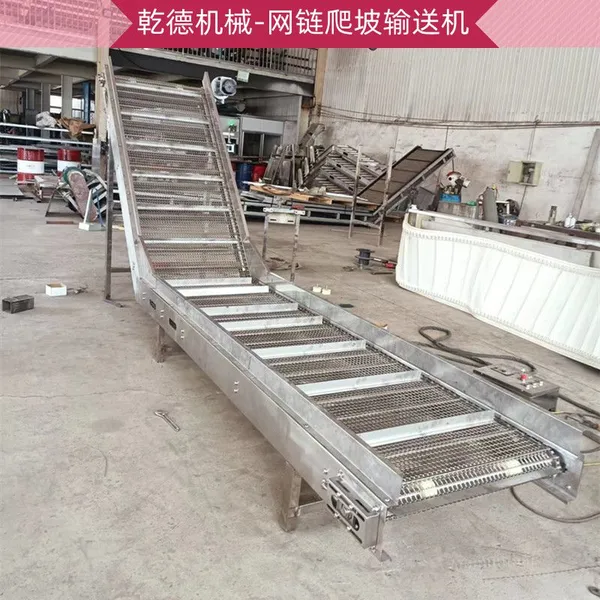
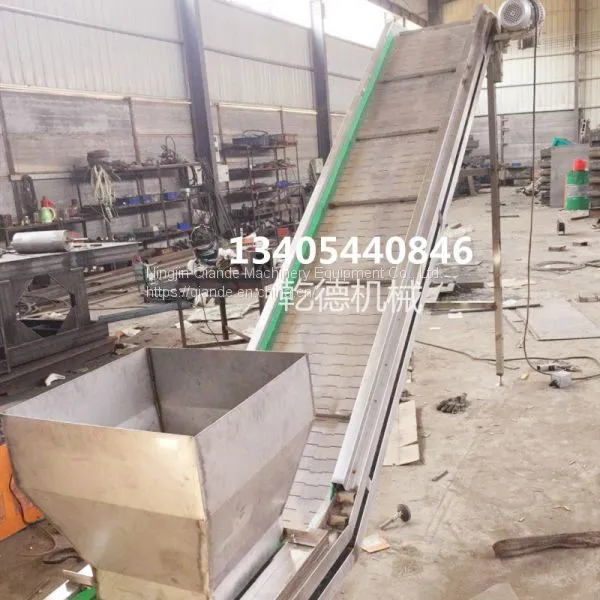
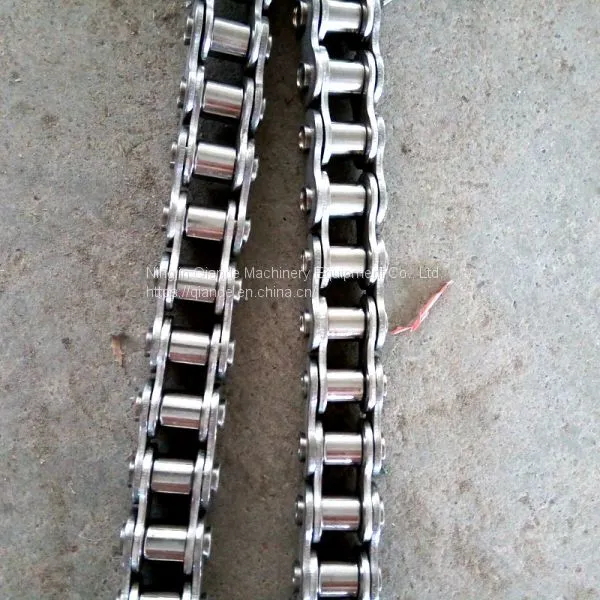
Climbing Chain Plate Conveyor Factory Production Customized Feeding Conveyor Assembly LineUS$ 20 - 300MOQ: 1 Meter
-
Stainless Steel Conveyor Belt for Cleaning Line, Great Wall Mesh Belt CustomizationUS$ 20 - 300MOQ: 5 Meters
-
Dryer Conveyor Chain Price AffordableUS$ 20 - 300MOQ: 5 Meters
-
Industrial Assembly Chain Conveyor Line, Punching Chain Conveyor ManufacturerUS$ 20 - 300MOQ: 1 Meter
-
Canned Beverage Bottling Chain Plate Conveyor CustomNegotiableMOQ: 1 Piece
-
Customized Source Factory Wholesale Price for Heavy-duty Plate Chain Conveyor BeltUS$ 20 - 300MOQ: 5 Meters
-
Food Production Line Stainless Steel Conveyor Belt ManufacturersUS$ 15 - 300MOQ: 5 Meters
-
C2082 Industrial Transport Chain WholesaleUS$ 10 - 50MOQ: 5 Meters
-
Distributor and Manufacturer of Industrial Transmission Roller ChainUS$ 10 - 50MOQ: 5 Meters
-
Customized Source Factory for Ton Pack Chain Plate Conveyor Belt Assembly LineNegotiableMOQ: 1 Meter
-
Design and Application of Conveyers Based on Chain and SprocketNegotiableMOQ: 5 Meters